

When I first committed to becoming a writer (back in the twentieth century), plagiarism was the mortal sin for which one might be metaphorically burned at the stake. Or, at the very least, kicked out of school. It was the boogeyman whose name you did not say three times in the mirror. Nearly three decades later, that boogeyman has taken the form of AI. And while I was (and am) defiantly against using it in the writing process, for the sake of appeasing my curiosity, I committed the mortal sin.
From my days in the ring, I learned how valuable it is to learn as much as you can about an opponent before facing them. Searching for a writing job had proven to be an act of futility, as the need for creativity and/or writers had dwindled. The already-underappreciated skills had been devalued and replaced. I knew AI was my enemy, and I relented to a desire to better understand my opponent. So I did the previously unthinkable.
I took a course in AI filmmaking.
I cringed writing that sentence in the same way I did while sitting through every hour of the weekly workshops. There was a reluctance to every direction and exercise; an underlying desire for this technology to prove how bad it was at doing the things to which I’ve devoted my life. But there was a sobering reality: it wasn’t bad at most of them.
Don’t get me wrong. It wasn’t great at most things either. Its understanding of character arcs was very weak but manageable. Its sense of story complexity left a lot to be desired, but it sorted dynamics that would’ve taken weeks for me to think through on my own. And it was a lot better at coming up with titles than me. I have to cede the victory to the technological overlord on that one. But it wasn’t as brilliant as I’d been worried about either.
After the course ended, I spent days reading through all of my notes and generated content, searching for the thing I might be missing that makes AI such an invaluable tool for so many creatives. Amid this search, one component stood out. There is a gigantic and critical difference between the way AI conjures things and the way I write them.
Like many people, AI wants to be understood. Unlike me, it needs to be understood.
One of the most indispensable aspects of my creative approach is a willingness to be misunderstood. It’s akin to writing a story for everyone to enjoy. If you try, I promise, no one will enjoy it. A story is a commitment; an exclusive agreement between writer and reader. The more inclusive you attempt to make it, the more the story will suffer. Stories have a distinct opportunity to challenge our preconceived notions and make us question ourselves. Much like any people-pleaser you’ve ever met, a story made for everyone has no desire to challenge you.
At a very young age, I was accustomed to being misunderstood. I lived in my own head, making sense of the world without much input from anyone else. My family talked around heavy things, such as grief or sadness, rarely intent on wading in the deep end with me. Stories opened a pathway toward the vast array of available emotions that I wanted to better understand. And the more I understood them, the more I wanted to express them.
This is not to say I’ve always been good at it. While my public speaking skills are probably my greatest professional asset today, preteen Jared was habitually saying the most awkward or corniest thing possible, assuming anyone was even paying attention to the gawky kid with the bucked and gapped teeth whose head was too big for his body, and whose glasses were too big for his head. Being ignored or rejected forced me to constantly question my own perspective. I was essentially a one-man debate team inside my head, eviscerating any thought I had if I ever seemed too sure of myself. I was good at arguing for and against myself.
AI has frequently been criticized for affirming whatever perspective it senses from the user, no matter how wrong or ridiculous it might be in real life. The stories it creates aren’t much different. It doesn’t pose any challenges deeper than the liminal level, it doesn’t write intense conflict very well, and the dialogue is, for lack of a better descriptor, too safe for my style of writing.
While many people rush to blame AI for many of the subpar stories we’ve encountered in recent years, it shouldn’t carry as much of the blame as they might believe. People have been writing stale stories for as long as they’ve been writing stories. In some cases, they’re even doing it on purpose.
Think of a TV show that started out as a genuine attempt at storytelling. After a certain degree of popularity, it starts to shift. Suddenly, there are celebrity cameos and stunt casting (hello, Ed Sheeran and Aaron Rodgers in Game of Thrones). Maybe it’s because a show has gone on for too long while the network refuses to let it go (like the Dawson’s Creek Season 6 Premiere, which featured a cameo from Jack Osbourne). This is a phenomenon that I refer to as “when a TV show becomes aware that it’s a TV show.”
The objective stops being about telling a good story, and starts being about entertaining people. And you might be thinking “aren’t they trying to entertain us with a good story, too?” Yup. And if it’s done well, you’ll be too lost in the story to realize you’re also being entertained. Once they take a low-effort swing like casting a Tiktok star or capitalizing on some trending topic, they’re pandering to the audience, which usually doesn’t go over very well. A story should have something to say. And, in my opinion, it should be saying something that most people aren’t already saying. But that brings me to another aspect of my experience with AI content.
AI doesn’t take any chances.
I’m currently working on one of the most ambitious projects of my career — the kind of thing that someone might discuss with their most trusted colleagues but wouldn’t dare put on paper without a few Oscars or Tonys already on the mantle and a financially secure environment around them. It’s what pulled me away from the carefully curated world of fiction books, which left me unfulfilled as I realized I wasn’t doing the thing that I first picked up a pen to do.
In the words of Rick Rubin from his incredible book, The Creative Act, the audience should be the last thing on the artist’s mind. While it is reasonable to be hopeful about how consumers might receive their creation, the artist mustn’t create to appease an audience. This runs in stark contrast to how a lot of movies, music, books, and other media are currently manufactured. When CNN is following up stories about the war in Iran with panel discussions about the canceling of the next season of “The Bachelorette”, it’s clear that even the news has become crowd-sourced. No one is plotting to distract us from the things that matter; they’re scrambling to keep up with the vapid content that actually keeps our attention.
But art doesn’t thrive in a desire to be liked or understood. Its existence should be an act of defiance against whatever conventional thinking dictates. Telling a daring story isn’t a perk; it’s the point.
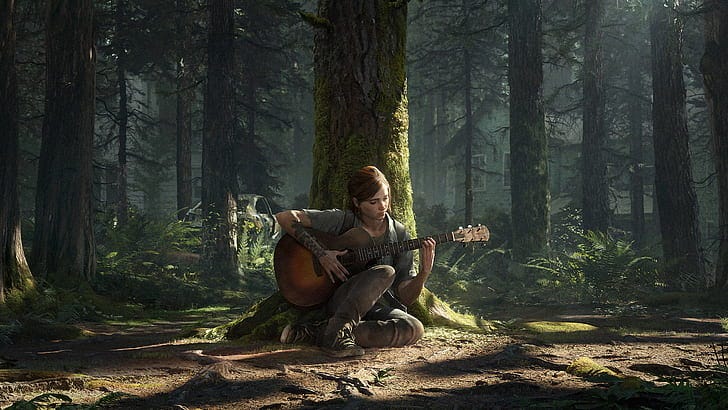
When Sidney Lumet decided to direct a movie set in one room with a bunch of men talking to each other, it was a laughable concept. But that’s how we got 12 Angry Men, arguably one of the greatest films of all time which is still taught in film schools over a half-century later. Daniel Myrick and Eduardo Sánchez decided to turn an entire genre on its head and revolutionize our perception of it in the process. Most people have no idea who those guys are, but their creation lives on: The Blair Witch Project. Neil Druckmann and Halley Gross knew they would ruffle some feathers when they killed off a beloved character in the first act of the sequel to an award-winning video game, but that didn’t stop them. And now, not only is The Last of Us Part II one of the most successful games of all time, but it has spawned more conversation about narrative decisions than just about any artistic creation of the century so far. It also spawned an HBO television series with a second season that, despite following the same primary storyline, is somehow woefully risk-averse. It is aware that it’s a TV show.
Even something as prestigious as the Academy Award for Best Picture doesn’t always reflect the broader cultural impact or longevity of a film. The Shawshank Redemption, Pulp Fiction, Do The Right Thing, and The Social Network join 12 Angry Men as incredible films that did not win the award, yet made lasting impressions on American culture. In the realms of television and music, the impacts can be even farther-reaching. You don’t need to have ever seen a single second of any episode of Dawson’s Creek to know that it’s theme song is “I Don’t Want To Wait” by Paula Cole. This is despite the fact that the show was never nominated for an Emmy award and the song never topped the No. 11 slot when it was first released two years before the show’s premiere.
Popularity and success, especially in creative fields, are nearly impossible to predict. If you’re being reactive to the current viral moment, it’ll be gone before you can catch the wave. Sure, some skill is helpful, but it often comes down to luck and timing. You can’t make the world prepared for what you bring to it, but that doesn’t mean you shouldn’t bring your authentic self to it. One of my favorite podcast discussions revolved around trying to predict what current musicians, artists, movies, shows, etc. would still be talked about in a century or two. As popular as they are, which ones will inevitably be a part of the cultural zeitgeist long after this generation is long gone? There were other musicians at the time, so why have Mozart’s and Beethoven’s legacies endured? William Shakespeare couldn’t have foreseen the television, let alone that we would be adapting his work four hundred years after his death. I don’t think that was a part of their plan. I don’t think it could’ve been.
One could argue that if you want to make a real and lasting impact, you shouldn’t be seeking praise and validation. You should be challenging society’s conventions, questioning established philosophies, and, dare I say, pissing some people off. Or, at the very least, you should be taking some chances. Why commit so much of our existence to exploring ourselves through creation if we’re going to conform into the same boxes as everyone else?
I don’t blame AI for its ability to manufacture content that’s so similar to real artists. That’s what it’s supposed to do. But when AI says “I can do what you do”, I don’t hear a mission statement. I hear a challenge.
And I accept.


